On CFA Level I exam day, you are not sitting a 270-minute exam. CFA Institute's on-screen breakdown lists eight segments that add up to 331 minutes: a tutorial and pledge, two 135-minute content sessions, a 31-minute break section, two one-minute introductions, a survey and a finish screen.
Check-in and security come before any of that. Two to four weeks out, most candidates have the content under control or close to it. What they have not rehearsed is the day itself: the passport check, the locker, the moment the tutorial ends and the real exam begins, and a break that is shorter than it looks.
None of this is difficult. It is unfamiliar, and unfamiliarity costs composure exactly when you need it. This article walks through the appointment segment by segment, with the clock that runs in each one.
The Official Timeline: 331 Minutes, Segment by Segment
The CFA Exam Day Guide gives the typical on-screen allocation for Level I. The page does not state a single total. The 331 figure is the sum of its segments, and the guide describes the table as typical rather than fixed. Plan around it, but follow what your screen says.
| Segment | Minutes | Cumulative | Illustrative clock |
|---|---|---|---|
| Tutorial and pledge | 19 | 19 | 08:15 to 08:34 |
| Session 1 | 135 | 154 | 08:34 to 10:49 |
| Break Introduction/Optional Break | 31 | 185 | 10:49 to 11:20 |
| Session 2 introduction | 1 | 186 | 11:20 to 11:21 |
| Session 2 | 135 | 321 | 11:21 to 13:36 |
| Survey introduction | 1 | 322 | 13:36 to 13:37 |
| Survey | 8 | 330 | 13:37 to 13:45 |
| Finish | 1 | 331 | 13:45 to 13:46 |
The clock times are an example, not a schedule. They assume an 08:00 appointment, arrival at 07:30 and a launch at 08:15. On those assumptions you are in the building from 07:30 until roughly 13:50. That is the day to plan sleep, food and transport around, not the 270 minutes of content time.
Some exam-day material still describes morning and afternoon sessions, which is paper-era wording. The current official guide lists two 135-minute content sessions with a break section between them. That is the structure you will see.
Before the Clock Starts: Arrival, Passport and Security
CFA Institute tells candidates to arrive 30 minutes before the appointment time, and late arrivals may be refused admission. Under the admission and appointment policy (updated 25 March 2025), a candidate refused for lateness forfeits the exam fee, which is non-refundable, non-deferrable and non-transferable. For comparison, rescheduling within the exam window under the same policy costs a non-refundable USD 250. Lateness is the most expensive mistake available on the day.
The guide also says you can expect to be seated within 30 minutes of your appointment time, and that the appointment time does not begin until you are seated and the exam is launched. In practice, time spent waiting in reception is not taken from your exam. Do not let it raise your pulse.
Identity is checked against one document. Under the identification policy (updated 23 April 2026), the only accepted ID is a valid, original, unexpired, machine-readable international travel passport with a photo, and the name must match your CFA account exactly. A mismatch means no exam and a forfeited registration fee. The passport is required at check-in for both exam sessions, so keep it where you can reach it during the break.
This is where candidates make mistakes. Compare your account name with your passport now, character by character, including middle names and their order. Two weeks out you can still fix a discrepancy. On the morning you cannot.
Security follows. Staff inspect belongings, clothing and eyeglasses and use a metal detector wand, at check-in and again before re-entry to the testing room after a break. Centres are monitored by CCTV. Your calculator must be an approved model: the TI BA II Plus (including the Professional) or the HP 12C and its listed variants.
Check-in can finish ahead of or behind schedule, so the tutorial and exam may start earlier or later than planned. Treat the start time as approximate and the on-screen prompts as authoritative.
The Tutorial: 19 Minutes That Are Not the Exam
The first 19 minutes cover the tutorial and the pledge. This segment orients you to the interface. It is not scored content.
CFA Institute explicitly tells candidates to know when the tutorial ends and the real exam begins, so they do not accidentally terminate the exam. The distinction matters. Read every transition screen before you click. A confident click on the wrong button is a risk that no amount of fixed income review protects against.
Use whatever time the tutorial leaves you. Adjust the chair and screen, confirm the calculator responds, and set your pacing checkpoints for Session 1. Then read the prompt that launches the exam, and only then begin.
Session 1, the Break Section and Session 2
Session 1 runs for 135 minutes. Pacing should be rehearsed before the day, not invented on it. Timed, full-length practice is where that habit is built, and how you use mock exams matters more than how many you sit.
The break section appears on screen as 31 minutes, labelled Break Introduction/Optional Break. You may see it described as 30 minutes elsewhere. The official figure is 31.
Two cautions follow from that label. First, the 31 minutes include the break introduction page, so do not assume the usable break is a full 31 minutes. Second, the official guide does not spell out exactly how the countdown behaves during that introduction. Treat the break as something under half an hour and plan backwards from the one-minute Session 2 introduction that follows it.
The break is not a free half-hour. It is a fixed window that has to cover walking, the restroom, your locker and a second security check.
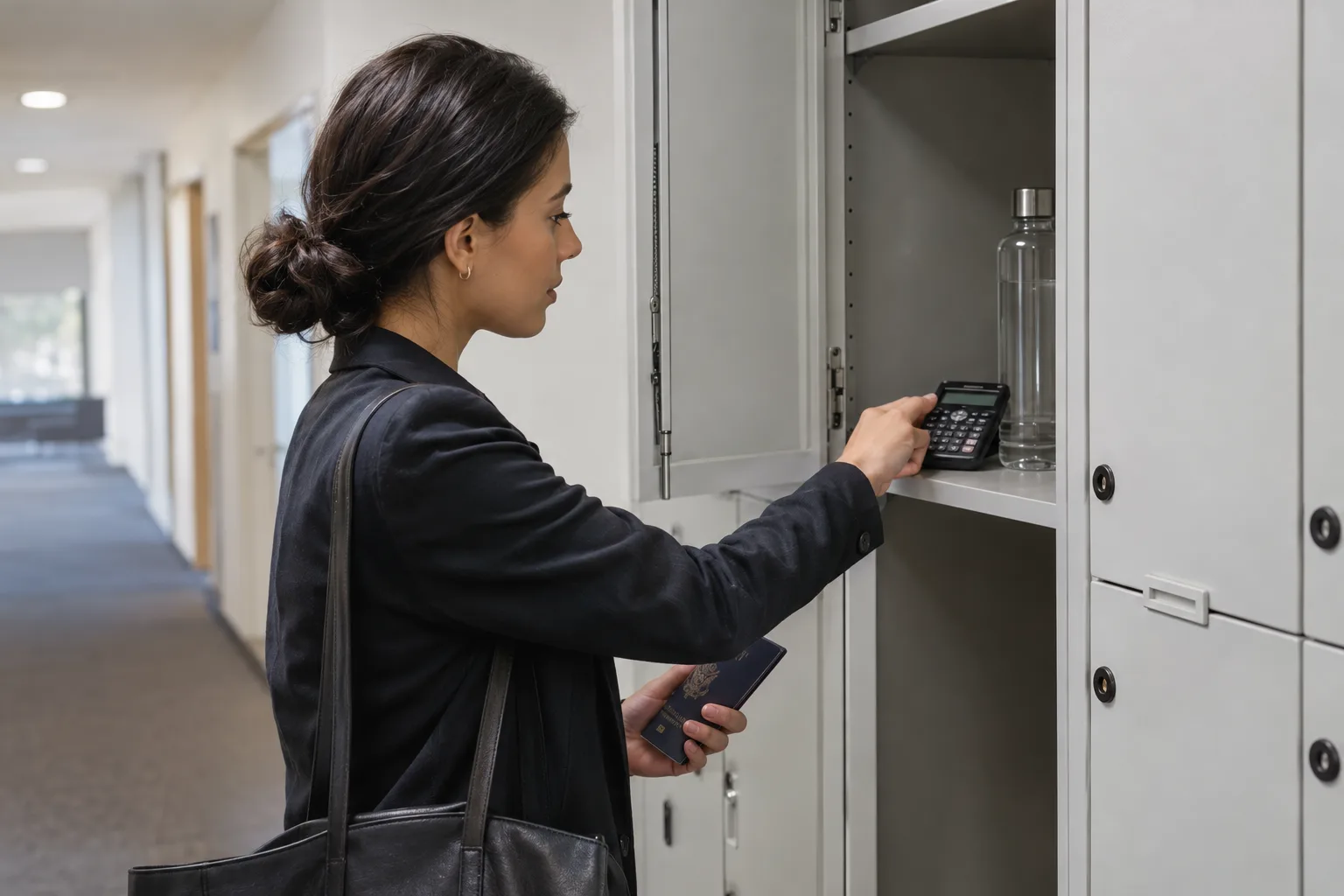
Food must stay in the locker or personal belongings area, so decide in advance what you will eat and drink and where it sits. That way the break is spent eating and resetting, not searching. Then return early enough to clear security and show your passport for Session 2.
Do not spend the break replaying Session 1. Those answers are behind you, and nothing you recall in the corridor changes them. Session 2 carries the same 135 minutes and deserves a clean start.
After Session 2 come a one-minute survey introduction, an eight-minute survey and a one-minute finish screen. Once Session 2 closes, the content portion of your day is complete.
Unscheduled Breaks and Disruptions: The Clock Keeps Running
Unscheduled breaks are part of the official admission policy. You may take up to two during testing, and the testing clock is not paused. You may use the designated restroom and, with staff authorisation, access your belongings only for water, food or medical items. Phones, other electronic devices and study materials are off limits, and you may not leave the test centre.
The practical implication is simple. Every unscheduled break is paid for in exam minutes, and the security inspection before re-entry sits inside those minutes too. Use them for genuine need, not as a reset button.
Disruptions follow a similar logic. If a technical or environmental disruption occurs but you are able to continue, you must continue. If you leave the test centre, CFA Institute will not approve rescheduling or deferral. The guide adds that proctors come to your workstation to help, and that you should keep working until one arrives if you can.
In practice, raise your hand, keep answering and let the proctor handle the issue. Walking out over a noisy room or a flickering screen turns a recoverable problem into a lost attempt.
What to Bring, and What to Leave at Home
The official what-to-bring list in the current exam day guide (read November 2026) is short:
- A valid passport whose name matches your CFA account exactly
- An approved calculator: TI BA II Plus (including Professional) or HP 12C and listed variants
- A face mask, if you want one or it is required
- Extra clothing layers
- Water in a clear, unlabelled bottle
- Optional personal care items
Food stays in the locker or personal belongings area. Everything else should stay at home, in the car or in the designated belongings area, as the guide directs. The less you carry, the faster security goes.
Focus on the calculator. Bring an approved model with fresh batteries, one you have used throughout timed practice. You should be fluent with the functions you depend on, especially the time value of money keys, and you should know how to clear its memory and check its settings before Session 1.
Layers matter because you cannot control room temperature across an appointment of five and a half hours. Being cold in the second session is a distraction you can remove the night before.
The Day-of Mistakes That Derail Prepared Candidates
In practice, candidates who lose ground on the day rarely lack content. They lack a rehearsal of the day. The errors that recur are few and all preventable:
- A name mismatch between passport and CFA account
- Arriving late, or with no margin for transport delays
- Confusing the end of the tutorial with the start of the exam
- Treating the 31-minute section as a full half-hour of rest
- Taking unscheduled breaks casually, forgetting that the clock runs
- Leaving the centre after a disruption that could have been worked through
- Bringing an unapproved calculator, or one never used under time pressure
Every item on that list can be fixed two weeks out. Sit one full mock in the real blocks: 135 minutes, a break of under half an hour, 135 minutes. Eat what you plan to eat on the day. Pack the bag the night before, passport on top. For the content side of these final weeks, the last 30 days review plan covers what to prioritise.
Content preparation decides your score. Logistics decide whether that preparation reaches the screen.
Exam day rewards what the preparation rewarded: consistent, deliberate practice. Run the day once before it counts, and the only thing left to manage at the test centre is the questions. If you want structured timed practice for the final weeks, Wall Street Uni has a free plan, with no card needed to start.